
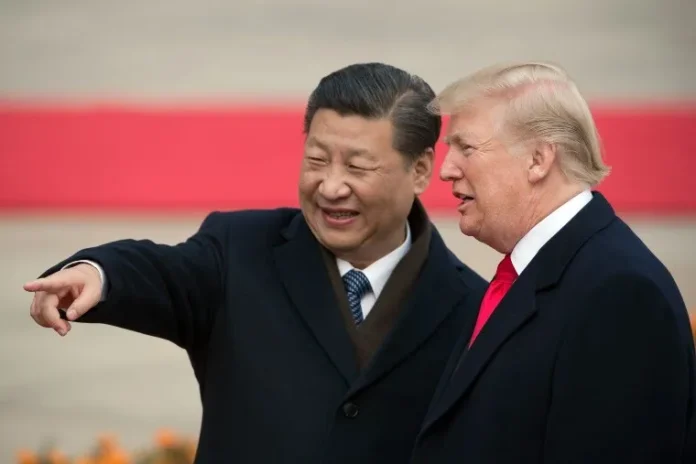
Former U.S. President Donald Trump has declared that a new U.S.–China trade deal is officially “done” after two days of high-level negotiations between American and Chinese officials in London.
The agreement revives a framework initially brokered last month in Geneva, signaling renewed economic cooperation between the world’s two largest economies. Chinese state media described the discussions as “reasonable” and “frank,” urging both countries to honor their commitments.
“China reiterates that the two sides should act in the same direction… and show the spirit of integrity,” reported Xinhua, the government-run news agency.
Under the new deal:
-
The U.S. base tariffs on Chinese goods will rise to 55%, a sharp shift from previous levels.
-
China will impose a 10% tariff on American products, a decrease from the trade war’s peak period, when joint tariffs soared to 245%.
A major breakthrough involves rare earth minerals, essential for electronics and defense industries. Trump stated that China—holding a near-global monopoly—will now supply these materials “up front” to the U.S. The rare earth dispute had long strained relations, especially after China restricted exports to Western nations.
Trump also hinted at relaxing a prior visa policy targeting Chinese students. The rule, championed by Secretary of State Marco Rubio, sought to limit visas for students connected to the Communist Party or sensitive research sectors. However, Trump’s recent post on Truth Social signaled a softer stance:
“WE WILL PROVIDE TO CHINA WHAT WAS AGREED TO, INCLUDING CHINESE STUDENTS USING OUR COLLEGES AND UNIVERSITIES (WHICH HAS ALWAYS BEEN GOOD WITH ME!),” he wrote.
This deal could significantly ease tensions and reshape global trade dynamics, though analysts remain cautious about its long-term sustainability.










Leave a Reply