
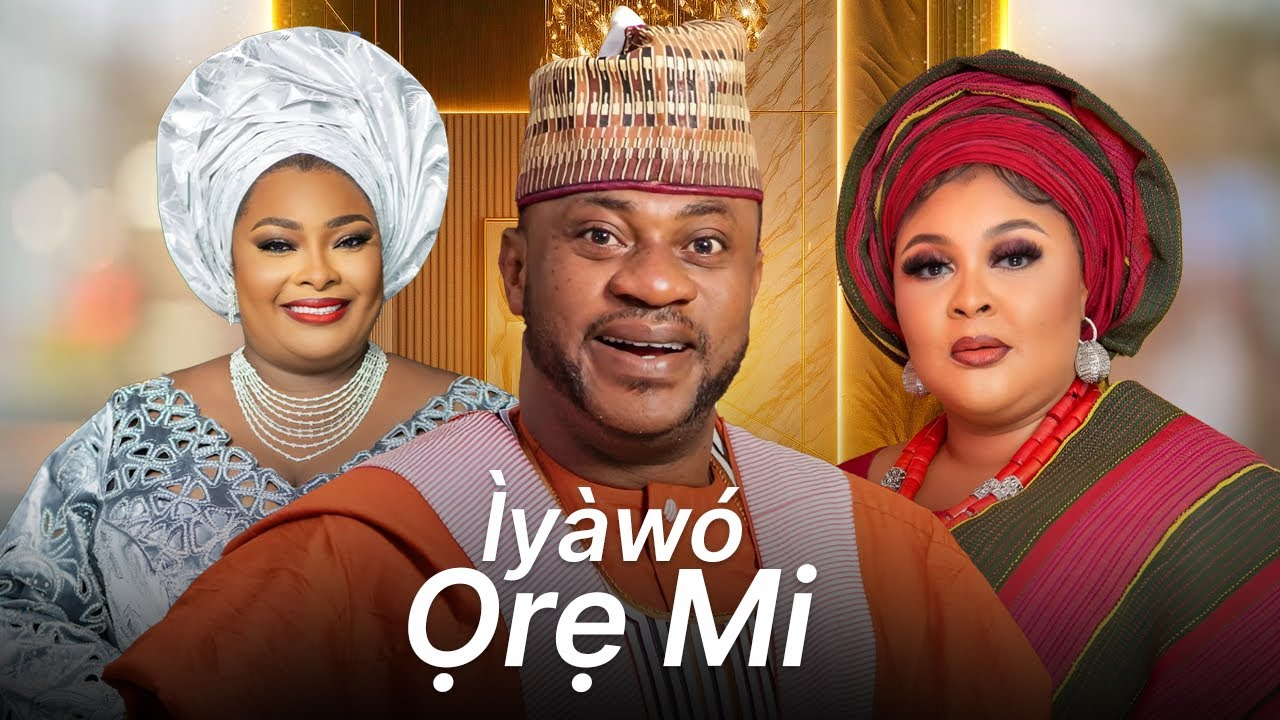
Love, Lies, and the Yoruba “Loverboy”: A Review
of Iyawo Ore Mi
#NollywoodReview #IyawoOre Mi #OdunladeAdekola
Rating: ……………………….. (3/5 Stars)
The Yoruba sector of Nollywood has long been the heartbeat
of indigenous storytelling, blending high-stakes domestic drama with a unique
brand of moral instruction. The 2025 release, Iyawo Ore Mi (My Friend’s
Wife), is no exception. Featuring heavyweights like Odunlade Adekola, Ronke
Odusanya, and Ireti Osayemi, the film attempts to navigate the murky waters of
friendship, marital infidelity, and the chaotic intersections of trust. As a
veteran analyst who has watched this industry evolve from the “VCD
era” to 4K streaming, I see Iyawo Ore Mi as a fascinating case
study in how Nollywood continues to polish its tropes while grappling with the
ghosts of its “Home Video” past.
The Hook: A Web of Familiar Betrayals
The film opens with a classic Nollywood hook: a high-energy
domestic confrontation that immediately signals the stakes. We aren’t eased
into the conflict; we are dropped into it. The narrative centers on the fragile
threads holding two families together, specifically focusing on how the
introduction of a “third party”—often the dreaded “best
friend”—can dismantle years of marital stability.
What makes Iyawo Ore Mi instantly recognizable to a
Nigerian audience is its cultural shorthand. When Odunlade Adekola appears on
screen, there is an expectation of a certain kinetic energy, and the film leans
into this. The opening sequences establish a world where appearances are
everything, and the domestic space is a battlefield of ego and desire.
Cinematography: High-Definition Ambition vs. TV-Style
Execution
Visually, Iyawo Ore Mi showcases the technical leap
the Yoruba industry has made. The camera quality is crisp, utilizing modern
sensors that capture the vibrant colors of Nigerian fashion and the skin tones
of the actors with impressive fidelity.
- Framing
and Shot Variety: The director leans heavily on medium shots and
close-ups. While this is effective for capturing the emotive facial
expressions of veterans like Ireti Osayemi, the film occasionally suffers
from a “talking heads” syndrome. In dialogue-heavy scenes, the
blocking feels somewhat static, reminiscent of television soaps rather
than cinematic features. - Lighting
and Mood: Interior scenes are generally well-lit, avoiding the muddy
shadows that plagued older productions. However, the lighting often lacks
“character.” It is functional rather than atmospheric. Whether
it’s a scene of deep sorrow or a moment of celebration, the light remains
consistently bright and flat, missing opportunities to use shadows to
heighten the tension of the betrayals being depicted. - Color
Grading: There is a noticeable warmth to the color palette, which
complements the “Aso-Ebi” culture and the affluent settings of
the lead characters. It feels expensive, which is exactly what the modern
Nollywood audience craves.
The Soundscape: A Mixed Bag of Melodies and Mic-Checks
In Nollywood, sound is often the Achilles’ heel, and Iyawo
Ore Mi struggles slightly here. While the dialogue is mostly audible, there
are moments where the room acoustics interfere, creating a hollow
“echo” effect in larger living room sets.
- The
Score: The music is traditional Yoruba drama fare—melodic, somewhat
intrusive, and heavily reliant on the “narrative soundtrack”
style where the lyrics almost explain the plot to the viewer. For a local
audience, this provides a familiar emotional guide, but for a global
streaming audience, it can feel a bit “on the nose.” - Foley
and Ambience: The background noise management is decent, though some
post-production transitions between outdoor and indoor dialogue scenes
feel abrupt. The use of silence is underutilized; the film is afraid of a
quiet moment, often filling the air with a persistent score when a
character’s silent realization would have been more powerful.
Costume, Makeup, and the “Big Boy” Aesthetic
This is where the film shines. The production design
successfully communicates social class without saying a word.
- Authenticity:
The costumes are impeccable. Ronke Odusanya’s characters are draped in
fabrics that scream “Lagos Socialite,” and the attention to
jewelry and headgear (Gele) adds a layer of cultural texture that is 100%
authentic. - Makeup
Realism: The makeup is “glam” heavy. Even in scenes where
characters are supposed to be waking up or in distress, the
“beat” is often still fresh. While this breaks realism, it
aligns with the “Nollywood Glamour” aesthetic that fans expect
from a star-studded cast.
Narrative Structure: The Pacing Problem
Iyawo Ore Mi clocks in at over two hours, and you
feel it. The film follows a linear structure but is bogged down by subplots
that don’t always serve the central theme.
- The
Mid-Section Slump: Around the one-hour mark, the film circles its
points. We see multiple scenes of characters discussing the same betrayal
without the plot moving forward. This is a common Nollywood trope—the
“extension” of drama for the sake of length. - The
Climax: The tension peaks around the 1 hour 25-minute mark when
medical results (the legendary DNA test plot point) come into play. This
is where the film finds its footing again. The resolution, however, feels
slightly rushed compared to the slow build-up, a frequent critique of
films that spend too much time on the “middle” and realize they
need to wrap up the “end” quickly.
Plot Logic: Tropes and Triumphs
The film leans heavily on the “Betrayal by a Close
Friend” trope. While relatable, it’s a path well-trodden.
- The
DNA Dilemma: Using a DNA test as the ultimate “truth-teller”
has become a cliché in modern Nigerian cinema. In Iyawo Ore Mi,
it’s used effectively for drama, but the medical logistics are handled
with typical “movie logic” rather than clinical accuracy. - Character
Motivations: Most character decisions are rooted in Nigerian societal
norms—shame, the importance of children in a marriage, and the influence
of the extended family. However, the “villain’s” motivation
occasionally feels one-dimensional. Why is the friend so intent on
destruction? A bit more backstory would have added the nuance needed to
elevate this from a melodrama to a psychological thriller.
Performance Analysis: The Titans at Work
The acting is the primary reason to watch this film.
- Odunlade
Adekola: He delivers a more restrained performance than his usual
high-octane comedy roles, which is refreshing. He portrays the wounded
husband with a mix of anger and vulnerability that anchors the film. - Ronke
Odusanya & Ireti Osayemi: These two are the soul of the movie.
Their chemistry (and subsequent friction) is palpable. They master the
“Yoruba look”—that silent, piercing gaze that communicates more
than three pages of dialogue. - Supporting
Cast: The supporting actors do a serviceable job, though some of the
“younger” characters feel a bit wooden in their delivery of
Pidgin and English, lacking the natural flow of the veterans.
Cultural Relevance: A Mirror to Society
Iyawo Ore Mi is deeply rooted in the “New
Nigeria” reality—a blend of traditional values and modern lifestyles. It
tackles:
- The
Fragility of Marriage: How external validation often outweighs
internal peace. - The
Role of Technology: How WhatsApp messages and digital footprints
become the “new evidence” in domestic disputes. - Faith
vs. Fact: The tension between what people pray for and what reality
(and science) reveals.
For the diaspora, the film offers a slice of home—the
sights, the sounds, and the specific “grammar” of Nigerian social
interaction. For the local audience, it’s a cautionary tale wrapped in
entertainment.
The Verdict: Is It Worth Your Data?
Iyawo Ore Mi is not a groundbreaking cinematic
masterpiece that reinvents the wheel. Instead, it is a high-quality
“comfort watch” for fans of Yoruba drama. It excels in performance
and costume design but is held back by predictable plotting and a slightly
bloated runtime.
It represents the “Middle Class” of
Nollywood—better than the rushed YouTube “epics,” but not quite at
the level of a global festival contender. It is a movie made for the
fans, by the stars they love.
Who Should Watch This?
- Fans
of Odunlade Adekola who want to see his serious side. - Lovers
of intense Yoruba domestic dramas. - Anyone
who enjoys a good “who-is-the-father” plot twist.
Conclusion
If you have a Sunday afternoon to spare and a bowl of
popcorn (or dodo) ready, Iyawo Ore Mi will keep you entertained. It’s a
reminder that in Nollywood, the greatest battles aren’t fought on fields, but
in the living rooms of those we trust the most.
Watch it for the performances, stay for the drama, but be
prepared for a few “Nollywood moments” along the way.
#NollywoodTimes
#NollywoodReview
#IyawoOreMi
#OdunladeAdekola











Leave a Reply