
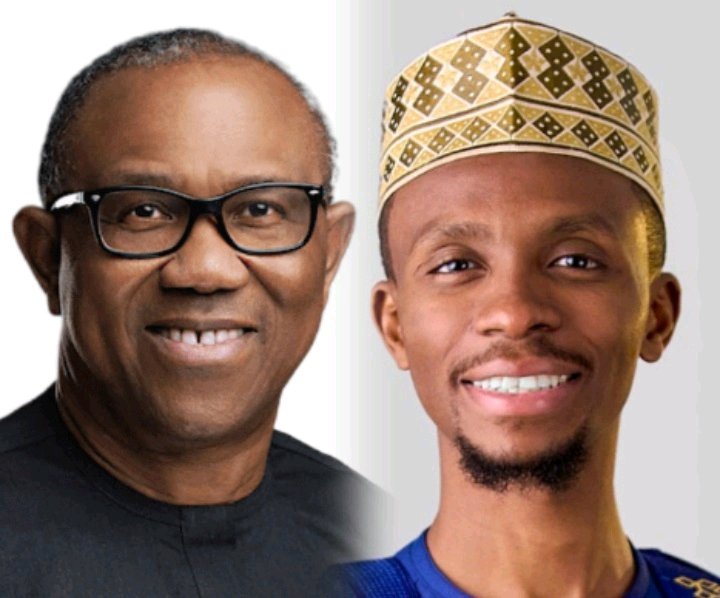
A political affairs analyst, Simeon Nnah, has pointed to shifting political sentiments ahead of Nigeria’s 2027 general elections, citing a notable statement attributed to the son of a prominent political figure as an indication of evolving voter preferences.
Speaking during an interview on News Central TV, Nnah revealed that Mohammed Bello El-Rufai had expressed willingness to support Peter Obi in the next presidential election. According to him, “El-Rufai’s son said, ‘If Peter Obi comes out for the 2027 election, he is going to vote for him.’”
Nnah explained that such a statement is significant, given the political background of Mohammed Bello El-Rufai, who is the son of former Kaduna State governor, Nasir El-Rufai. He noted that endorsements or expressions of support from individuals within influential political families often carry symbolic and strategic weight in Nigeria’s political environment.
According to the analyst, the comment reflects a broader trend in which younger political actors and voices are beginning to assert their independence and shape political discourse in new ways. He observed that this development aligns with the increasing influence of youth-driven political movements, particularly those that gained traction during the 2023 elections.
Nnah further stated that such expressions of support could energize Obi’s base, especially among young voters who are already a key component of his political following. He argued that when younger figures associated with established political families publicly align with a candidate outside their traditional political structure, it may encourage others to reconsider their own positions.
He added that the potential impact of this development extends beyond symbolism. In regions where political families maintain significant influence, shifts in alignment—especially among younger members—can have a ripple effect on voter behavior. According to him, this could contribute to a gradual realignment of political loyalties, particularly among undecided voters or those dissatisfied with existing party structures.
The analyst emphasized that Nigeria’s political landscape is increasingly being shaped by cross-generational dynamics. While established politicians continue to play a dominant role, younger actors are emerging as influential voices capable of mobilizing support, especially through grassroots engagement and digital platforms.
However, Nnah cautioned that individual endorsements, while important, are not sufficient on their own to determine electoral outcomes. He stressed that the real test lies in how such support translates into organized political action, including voter registration, turnout, and coordinated campaign efforts.
He also pointed to the issue of voter apathy, which has affected previous elections, noting that even strong support bases must be effectively mobilized to achieve meaningful results at the polls. According to him, the consolidation of youth support could be decisive if properly harnessed, particularly in a highly competitive electoral environment.











Leave a Reply