
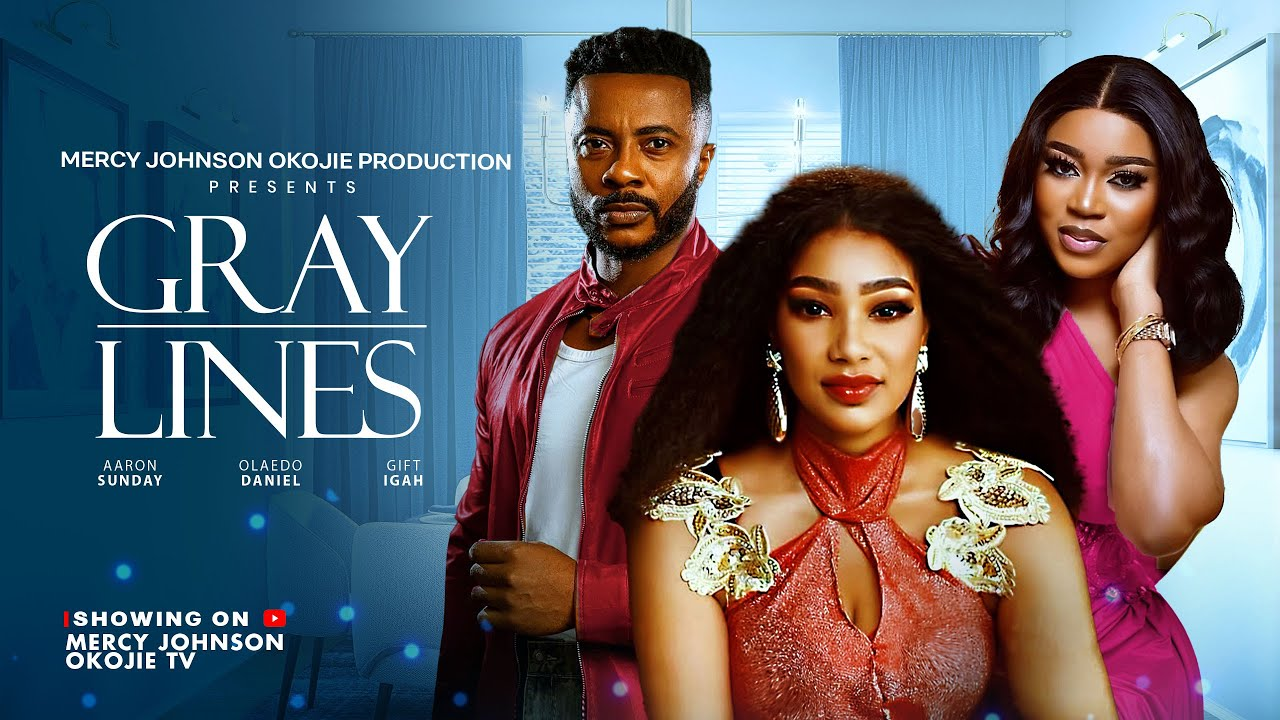
1. Narrative Architecture
The film employs a “Slow Burn” approach that successfully lures the audience into a false sense of security. The transition from a domestic drama—centered on a mother-daughter rift and political aspirations—to a gritty blackmail thriller is executed with deliberate precision.
The character of Jasper serves as an effective, albeit disturbing, plot device. Initially presented as a “Trojan Horse” of innocence, his transformation into a predator feels earned because the script meticulously plants seeds of his “too good to be true” nature. The narrative shift at the [01:12:44] mark, where Jasper flips the script from victim to accuser, is a pivotal structural moment that transforms the film from a character study into a high-stakes legal and moral puzzle.
2. Character Study
Clara (Mercy Johnson Okojie): The film handles Clara’s psyche with significant nuance. Her political ambitions are not just a career choice but a shield against a history of sexual trauma [05:12]. This vulnerability makes her attraction to the “innocent” Jasper both tragic and believable.
Jasmine: Her arc represents the bridge between idealism and harsh reality. Her journey from doubting her mother to uncovering the truth via Manuel’s deception [01:49:06] provides the emotional anchor of the film.
Manuel: Manuel is the classic Machiavellian antagonist. His chemistry with Jasmine is built on a foundation of professional manipulation, making his ultimate reveal as the “architect” of the extortion [01:52:00] a chilling commentary on misplaced trust.
3. Thematic Depth
Extortion & Public Perception: Gray Lines masterfully explores how “the court of public opinion” is used as a weapon. The 50 million naira demand [01:45:05] isn’t just about money; it’s about the price of a woman’s reputation in a society that often blames the victim.
Generational Trauma: The film suggests that silence is a legacy. Clara’s 20-year abstinence [05:22] and her eventual “betrayal” of that silence highlights how trauma dictates the lives of powerful women behind closed doors.
The Vulnerability of Power: It comments on the paradox of the “Powerful Woman”: the higher Clara climbs politically, the more leverage her enemies have to pull her down using her private vulnerabilities.
4. Technical Execution
Cinematography: The film uses tight framing in domestic spaces to create a sense of claustrophobia, emphasizing that Clara is never truly safe even in her home.
Motif (The “Special Tea”): The recurring use of the Chamomile tea [55:50] is a brilliant motif. It represents the “comfort” that Jasper offers, which is actually the sedative that allows the extortion plan to take root.
Dialogue: The dialogue is sharp, particularly during the therapy sessions [03:50] and the final confrontation [01:51:23]. It avoids the over-dramatization common in some Nollywood productions, opting for a more grounded, psychological tone.
5. Critical Verdict
Pros:
Strong lead performance by Mercy Johnson Okojie.
Subtle handling of complex themes like rape and trauma.
A genuinely surprising third-act reveal.
Cons:
The pacing in the second act occasionally lags.
The detective character feels slightly underdeveloped compared to the core trio.
Quality Rating: …………………. 8.2/10 Stars
Gray Lines stands out in contemporary Nollywood as a sophisticated psychological thriller. It moves away from the “glitz and glamour” of high-budget comedies to deliver a sobering look at the intersections of power, trauma, and betrayal.
#NollywoodTimes
#GrayLinesMovie
#MercyJohnsonOkojie
#NollywoodThriller.














Leave a Reply