
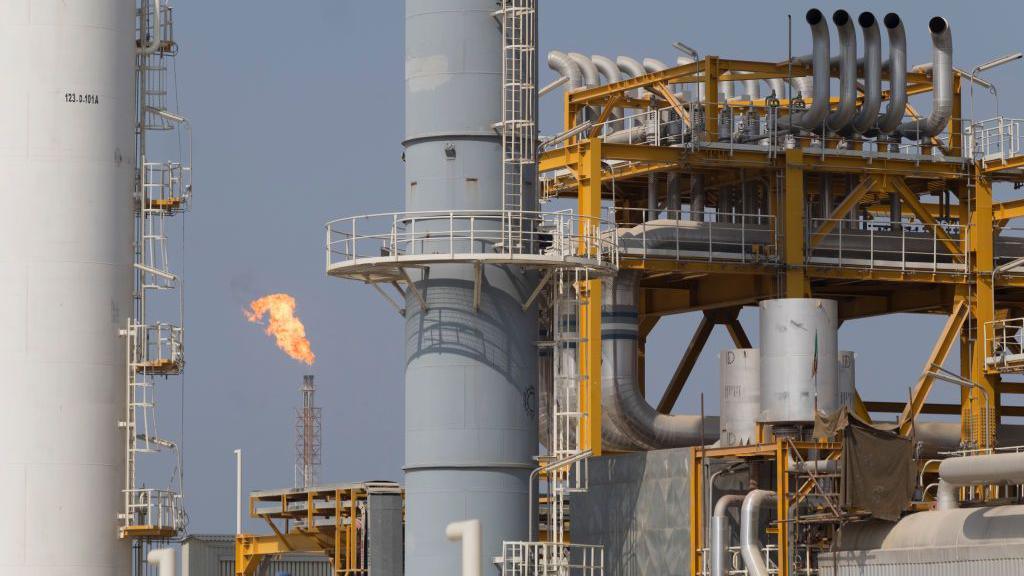
An airstrike has struck Iran’s South Pars gas field, the world’s largest natural gas reserve, escalating tensions in the Middle East and raising fears over global energy security.
Iranian state media reported explosions at the site following what it said was an Israeli attack on the vast facility, which produces around three-quarters of the country’s gas supply. The field, shared with Qatar, is a critical component of regional and global energy infrastructure.
Qatar condemned the strike, with Foreign Ministry spokesman Majed Al Ansari describing it as reckless. “The Israeli targeting of facilities linked to Iran’s South Pars field, an extension of Qatar’s North Field, is a dangerous & irresponsible step amid the current military escalation in the region,” he said.
Iran responded with strong warnings of retaliation, signalling a potential expansion of the conflict to energy infrastructure across the Gulf.
The Iranian military said: “As previously warned, if the fuel, energy, gas, and economic infrastructures of our country are attacked by the American-Zionist enemy, in addition to a powerful counterattack against the enemy, we will severely strike the origin of that aggression as well. We consider targeting the fuel, energy, and gas infrastructures of the countries of origin legitimate and will retaliate strongly at the earliest opportunity.”
Israel’s military said it had also carried out strikes on fuel infrastructure in southern Lebanon linked to Hezbollah, the Iran-backed armed group.
The escalation comes as Iran issued evacuation warnings for major oil and gas installations across the Gulf, including facilities in Saudi Arabia, the United Arab Emirates and Qatar, warning they could become targets “in the coming hours”.
The warning stated: “These centres have become direct and legitimate targets and will be targeted in the coming hours. Therefore, all citizens, residents, and employees are requested to immediately leave these areas and move to a safe distance without any delay.”
Global energy markets reacted sharply, with oil prices rising by around five per cent to $108 per barrel amid fears of disruption to supplies, particularly through the strategically vital Strait of Hormuz, which handles roughly one-fifth of global oil exports.
The situation has been further complicated by reports that a projectile struck the Bushehr Nuclear Power Plant, Iran’s only operational nuclear power station. The International Atomic Energy Agency confirmed the incident but said there was no damage to the facility or injuries to staff.
“A projectile hit the premises of the Bushehr NPP on Tuesday evening. No damage to the plant or injuries to staff reported,” the agency said. IAEA Director General Rafael Grossi called for restraint. “A call for restraint during the conflict to avoid any risk of a nuclear accident.”
The developments come amid broader military activity involving the United States, with former president Donald Trump reportedly authorising strikes on Iranian missile infrastructure in an effort to counter threats to shipping routes in the region.
With tensions mounting and threats expanding to critical energy and nuclear sites, analysts warn the conflict could have far-reaching consequences for global markets and regional stability.
#Israel #destroys #worlds #largest #gas #field #Iran












Leave a Reply