

Former Governor of Kaduna State, Nasir El-Rufai, has taken legal action against the Independent Corrupt Practices and Other Related Offences Commission (ICPC).
Nasir El-Rufai is demanding ₦1 billion in damages over the alleged unlawful search of his home in Abuja.
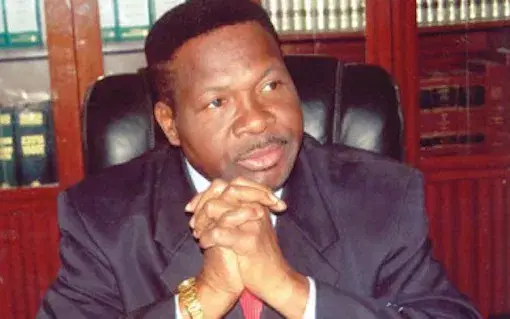
The ex-governor, through his team of lawyers led by Oluwole Iyamu, SAN, filed a fundamental rights enforcement suit challenging a search warrant issued on February 4 by a Chief Magistrate in the Federal Capital Territory (FCT).
In the case, the ICPC is listed as the first respondent, while the Chief Magistrate of the FCT Magistrate’s Court, the Inspector-General of Police, and the Attorney-General of the Federation are also named as respondents.
El-Rufai is asking the court to declare the search warrant invalid and set it aside.
He argues that the warrant lacked clear details, contained drafting mistakes, and did not show proper legal grounds for the search.
According to him, this made the operation unlawful and a violation of his constitutional right to privacy.
He also wants the court to rule that the February 19 search of his residence at 12 Mambilla Street, Aso Drive, Abuja, carried out by ICPC officials and police officers, breached his rights to dignity, personal freedom, fair hearing, and privacy as guaranteed under the Constitution.
In addition, the former governor is seeking an order preventing the authorities from using any items or evidence obtained during the search in any investigation or court case against him.
He is also asking that all items taken from his home be returned immediately, along with a full list of what was seized.
El-Rufai is demanding ₦1 billion as general, exemplary, and aggravated damages.
He said the amount covers compensation for emotional distress and loss of personal security, punishment to discourage similar actions by law enforcement in the future, and damages for the oppressive conduct.
The former governor is also requesting ₦100 million to cover legal costs.
In his legal arguments, Iyamu said the search warrant failed to meet the requirements of the Administration of Criminal Justice Act and the ICPC Act.
He argued that the law requires clear written information under oath, specific details of the location and items to be searched, and proper formatting of the warrant — conditions he claims were not met.
The lawyer further maintained that evidence obtained through an invalid warrant should not be admitted in court.
He cited past court decisions, including C.O.P. v. Omoh and Fawehinmi v. IGP, to support his position that improperly obtained evidence violates fundamental rights.
In an affidavit supporting the suit, Mohammed Shaba, a principal secretary to El-Rufai, said ICPC and police officers arrived at the Abuja residence around 2 p.m. on February 19 with what he described as a defective warrant.
He claimed the warrant did not clearly state what items were being searched for and contained several errors.
Shaba also alleged that officers failed to follow proper procedures before carrying out the search.
He said they seized documents and electronic devices, causing humiliation and emotional distress.
According to him, none of the confiscated items has been returned, and authorities are still relying on them.
El-Rufai insisted that the court should uphold his constitutional rights and grant the reliefs he is seeking.
ALSO READ: DSS To Arraign Nasir El-Rufai Over Alleged Cybercrime, Security Breach
#Nasir #ElRufai #Files #1bn #Lawsuit #ICPC #Alleged #Abuja #Home #Invasion












Leave a Reply