
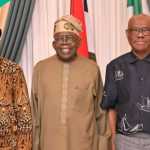
According to a NewsVista correspondent, fresh revelations have surfaced following the peace pact brokered by President Bola Ahmed Tinubu between embattled Rivers State Governor, Siminalayi Fubara, and his estranged political godfather, Nyesom Wike.
What many Nigerians initially celebrated as a sign of reconciliation is now stirring mixed reactions nationwide, as reports suggest that the peace deal came with heavy political conditions — all seemingly in favour of Wike.
The closed-door meeting, which took place at the Presidential Villa in Abuja on Thursday, June 26, was attended by President Tinubu, Governor Fubara, and Wike — the immediate past governor of Rivers State and now Minister of the Federal Capital Territory (FCT).
While both political leaders emerged from the meeting pledging unity and promising “no more war,” it didn’t take long before alleged details of their agreement began to leak.
Isaac Fayose, younger brother of former Ekiti Governor Ayodele Fayose, has now come forward with claims that Fubara agreed to three major conditions to secure peace — terms that many have described as political surrender.
According to Isaac Fayose:
-
Fubara agreed not to seek re-election in 2027.
-
Wike would appoint all new local government chairmen in the state.
-
The governor would pay all pending allowances owed to lawmakers loyal to Wike.
Fayose went as far as calling the agreement a “political coup,” insisting that the embattled governor has effectively handed over control of the state. “I pity Governor Fubara and the good people of Rivers. He no longer has a say in the affairs of the state,” Fayose declared in a video shared online.
Tinubu’s Emergency Declaration and Fubara’s Suspension
Earlier in the year, President Tinubu took drastic action by declaring a state of emergency in Rivers State, citing a complete breakdown in governance. This led to the suspension of Governor Fubara, his deputy, and the state House of Assembly, as political tension escalated.
In response, the National Assembly backed the president’s move and constituted a 21-member ad hoc committee to oversee the state’s administration under a presidentially appointed sole administrator.
Speaker of the House, Tajudeen Abbas, had earlier hinted at efforts to launch a reconciliation committee to calm tensions, but many political observers argue that the latest “peace” has come at a steep cost for democracy in Rivers State.
President Tinubu’s Criticism of Fubara
In a prior nationwide broadcast, President Tinubu revealed the reasons behind Fubara’s suspension — citing repeated abuse of the rule of law, disobedience to presidential directives, and failure to de-escalate the crisis despite previous interventions.
The president expressed disappointment that earlier attempts to mediate had failed due to the refusal of both sides to honour earlier agreements.
Final Thoughts from NewsVista
The political drama in Rivers State is far from over. While the presidential peace deal may have silenced public clashes for now, the alleged behind-the-scenes agreements are raising questions about democracy, loyalty, and the future of governance in Nigeria’s oil-rich region.
Is peace truly worth it if it comes at the cost of a governor’s independence?
What are your thoughts on this unfolding political saga?
Share your opinions below and stay tuned to NewsVista for verified updates.












Leave a Reply