
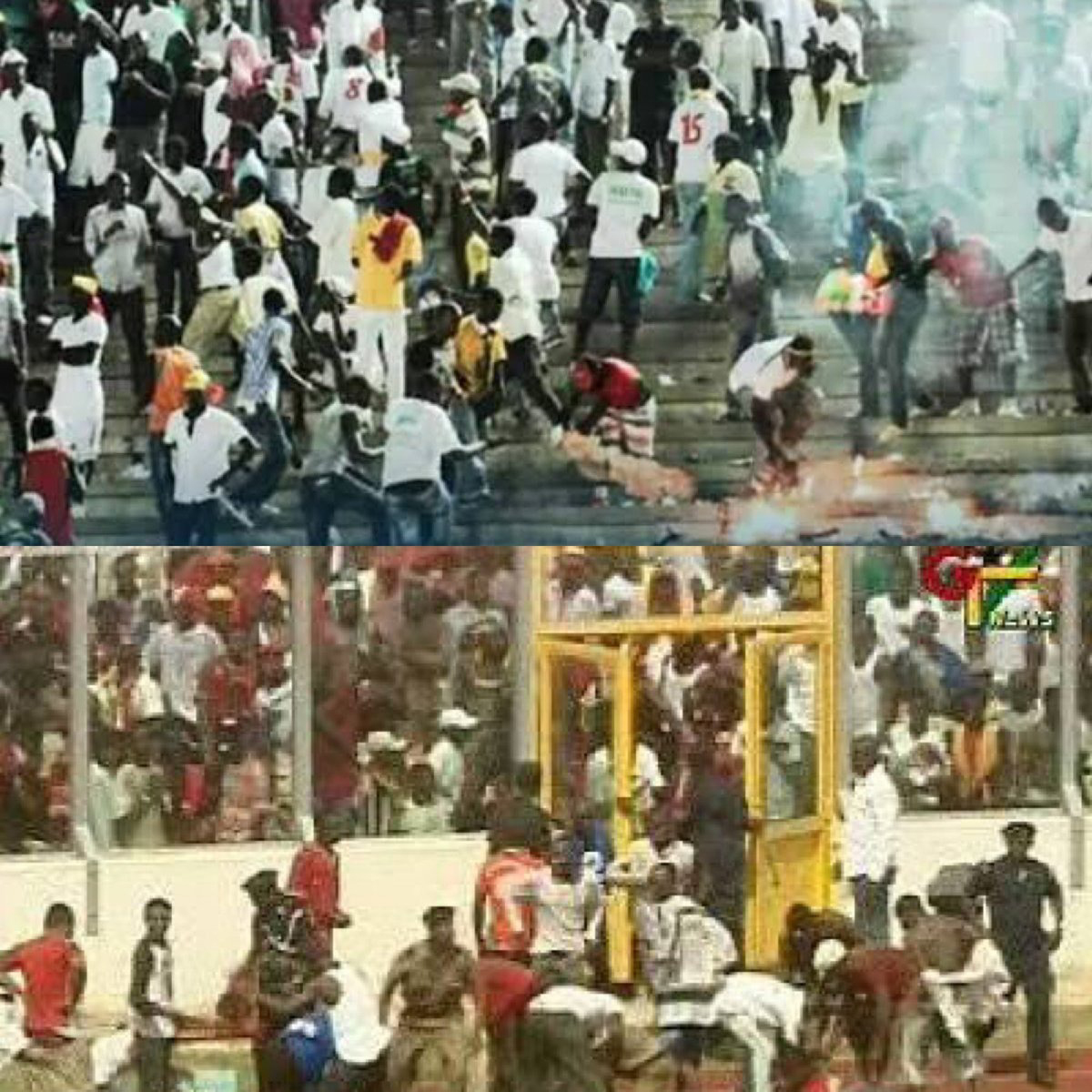
This year marks 25 years since one of the darkest moments in Ghana’s sporting history, the May 9th disaster of 2001, a tragedy that permanently changed football safety standards in the country and across Africa.
On May 9, 2001, Ghana’s biggest clubs, Accra Hearts of Oak and Asante Kotoko, faced off in a tense league match at the Accra Sports Stadium.
Kotoko were leading 1–0, but Hearts of Oak mounted a dramatic late comeback to win 2–1. The result sparked anger among some Kotoko supporters, who began throwing objects and stadium seats onto the pitch.
Security forces responded with tear gas, which triggered panic and a deadly stampede as thousands of fans tried to escape.
In the chaos, about 126 people lost their lives, mostly due to suffocation and crushing injuries, making it one of the worst stadium disasters in football history.
Twenty-five years on, the memory remains painful for Ghanaian football. Many football personalities continue to describe the incident as a national tragedy that should never be repeated.
Former Kotoko chairman Herbert Mensah, who witnessed the disaster firsthand, has often spoken about the emotional trauma of that day, recalling how lives were lost in front of him and describing it as an experience that shaped his lifelong advocacy for safer stadiums.
Despite the lessons of May 9, concerns about football violence in Ghana have not completely disappeared. In recent years, the country has seen repeated cases of stadium unrest, fan confrontations, and violent incidents during league matches.
One of the most widely discussed recent tragedies was the death of Kotoko supporter Francis Frimong “Pooley” in February 2025 following a match incident at Nsoatreman. The incident reignited national debate about crowd control and stadium discipline.
Other matches have also been marred by clashes, object throwing, and tensions between fans and security personnel.
Former players, coaches, and the Ghana Football Association (GFA) have warned that such incidents suggest that football violence remains an ongoing challenge. Many have called for stronger enforcement of rules and a cultural shift in fan behaviour.
In response, the GFA has introduced several measures over the years to improve stadium safety. These include stricter match-day security protocols, enhanced police collaboration, bans on prohibited items, and disciplinary sanctions against clubs whose supporters misbehave. Clubs are also being pushed to take greater responsibility for controlling their supporters.
Every year, May 9 is marked with remembrance events across the country to honour the victims. The message remains unchanged: “Never Again.”
However, continued isolated incidents show that Ghana football still faces the challenge of fully eliminating stadium violence and ensuring that such a tragedy never repeats itself.
Read Original#years #pain #lessons #reflection
…WATCH THE VIDEO HERE













Leave a Reply