
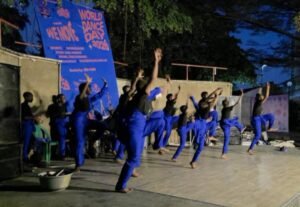
Nigerian dancers are intensifying calls for stronger recognition of dance as a structured, culturally significant and profitable profession, as practitioners push for better industry support, preservation of street dance heritage and greater global visibility.
Industry stakeholders say the perception of dance as a side activity no longer reflects the realities of a growing creative sector that now extends beyond performances into education, wellness, digital content and international collaborations.
Obiajulu Ozegbe, Chairman of the Guild of Nigerian Dancers (GOND), Lagos Chapter, said dance had evolved into a profession capable of creating employment and sustainable income for practitioners willing to approach it with discipline.
“Dance is no longer just about stage performances.
“It now includes content creation, therapy, production, media and education.
“There are people earning consistently and even employing others through dance,” he said.
According to him, dancers now earn through music video appearances, live shows, teaching, digital content and touring productions, while global collaborations continue to expand opportunities for Nigerian creatives.
Ozegbe said GOND was positioning itself as a platform to connect emerging talents with networks and opportunities that would otherwise take years to access independently.
“It helps young dancers to grow faster and find their place in the industry,” he said.
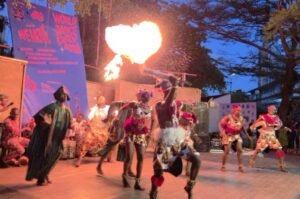
Recent industry activities to commemorate World Dance Day 2026 in Lagos, reflected these broader ambitions, combining performances with workshops, sports competitions, mentorship sessions and discussions on the future of dance in Nigeria.
Training sessions at the J. Randle Centre for Yoruba Culture and History exposed dancers to choreography, creative practice and dance therapy, while legal and financial sessions addressed taxation and financial literacy within the largely informal creative economy.
Beyond professional growth, practitioners also raised concerns over what they described as the gradual loss of Nigeria’s street dance heritage due to poor documentation and weak archival systems.
Dance expert, Hilary Uzorka, popularly known as Hilary Jackson, warned that many Nigerian dance styles gaining global attention remain undocumented and frequently disconnected from their origins.
“A lot of our dances have gone so far as Beyoncé doing our moves.
According to him, even local dancers often perform movements without understanding their cultural history or evolution.
“She doesn’t even really know where the move came from.
“Most dancers in Nigeria do these styles but they don’t know what they do,” he said.
Uzorka attributed the problem to the failure of earlier generations to properly preserve dance histories, leaving younger practitioners with fragmented knowledge about foundational street styles such as Galala and Konto.
To address the gap, he said he had begun documenting more than 50 Nigerian street dance styles through written records and video archives aimed at preserving their origins and structure.
“By so doing, we’ll be generating money that will be able to support dance veterans,” he said.
The urgency surrounding preservation is heightened by the growing global spread of Nigerian dance culture, often consumed abroad without adequate cultural context.
For Chilean saxophonist, Alvaro Guzman, Nigerian dance first appeared as an online discovery during the COVID-19 lockdown.
“In my country, it’s too far from Africa. So, the information is not clear,” he said.
Guzman explained that although he later fused Afro dance with music performances, he only fully understood the cultural depth of the movements after visiting Nigeria.
Describing the experience simply as ‘Energy,’ Guzman said, “Everything now makes sense in my mind, in my heart also.”
For many Nigerian dancers, however, the journey into the profession often begins informally, driven first by passion before financial rewards emerge.
Ugo Obiayo, immediate past Chairman of GOND, said her entry into dance happened accidentally during her student years but gradually became a profession that funded her education and expanded her worldview.
“By the time I started earning and people began to see me as a professional, I realised it was no longer just fun.
“It became something I had to take seriously,” she said.
Still, practitioners say the industry remains challenged by irregular income, societal stereotypes and limited institutional support.
Dance artiste and entrepreneur Ann Osilike recalled earning as little as N500 and N1,000 during her early days in the profession before bigger opportunities emerged through persistence and networking.
“There are periods when we have back-to-back shows but there are also quiet periods, so you need to save,” she said.
Beyond entertainment, dancers are increasingly positioning movement as a wellness practice tied to emotional and mental wellbeing.
Creative director and dance therapist Rodiah Lawson, popularly known as Roddie Law, described dance as a conscious and healing process capable of helping people manage stress and fear.
“Dance is the highest form of expression.
“When you move consciously, your body responds to what your mind is telling it.
“It’s not just movement, it becomes a tool to release stress, tension and even fear,” she said.
At the intersection of performance and advocacy, spoken word artist and creative director, Gift Chikere, said dance and spoken word were increasingly being combined to address societal issues and shape public consciousness.
“As a performer, you are not just speaking; you are moving, you are acting, you are embodying a message.
“Art is more than just entertainment; it is a tool for social transformation and community building,” she said.
For many practitioners, the evolving dance landscape reflects a broader shift within Nigeria’s creative economy, one where movement is no longer viewed merely as entertainment but as culture, business, therapy and social expression rolled into one.
For some practitioners, however, preserving the roots of Nigerian dance remains central to its future global relevance.
“It’s going to bring back the lost glory of Nigeria, where it all began,” they said





Leave a Reply