
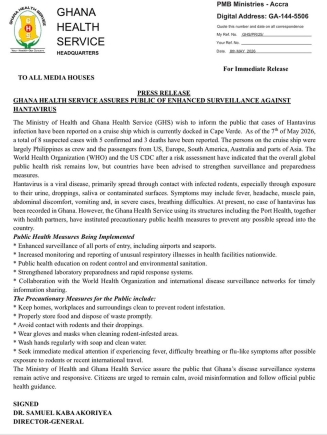
The Ghana Health Service (GHS) has increased disease surveillance across the country following a reported outbreak of Hantavirus on a cruise ship that has now docked in Cape Verde.
In a statement, the GHS confirmed that Ghana has not recorded any case of Hantavirus.
However, it said health authorities have stepped up monitoring as a precaution after the infected ship arrived in the region.
Officials reported that the cruise ship recorded eight suspected cases, with five confirmed infections and three deaths.
The vessel carried crew members mainly from the Philippines, while passengers came from several regions including the United States, Europe, South America, Australia, and Asia.
Global health bodies, including the World Health Organization and the US CDC, assessed the situation and concluded that the overall global public health risk remains low.
Even so, they advised countries to strengthen surveillance and preparedness systems.
Health experts explained that Hantavirus spreads mainly through contact with infected rodents.
People can get infected through exposure to urine, droppings, saliva, or contaminated surfaces.
The disease may cause symptoms such as fever, headache, muscle pain, stomach pain, vomiting, and in severe cases, breathing difficulties.
The Ghana Health Service said the Ministry of Health and its partners are taking precautionary steps to prevent any possible spread into the country.
These measures involve Port Health officials and other public health structures working together to strengthen monitoring systems.
Authorities have intensified checks at all entry points, including airports and seaports. They have also increased surveillance for unusual respiratory illnesses in health facilities across the country.
In addition, health officials are promoting public education on rodent control and proper sanitation. Laboratories have also strengthened preparedness, and rapid response teams remain on alert.
Ghana is also working closely with the WHO and international disease surveillance networks to share timely information.
The public has been advised to maintain clean homes and workplaces to prevent rodent infestations.
Health authorities also urge people to store food properly, dispose of waste quickly, and avoid contact with rodents or their droppings.
People cleaning areas with possible rodent presence should wear gloves and masks.
The GHS also encourages frequent handwashing with soap and clean water.
Anyone who develops fever, breathing difficulties, or flu-like symptoms after exposure to rodents or international travel should seek medical care immediately.
The Ghana Health Service reassured the public that Ghana’s disease surveillance system remains active and responsive.
It urged citizens to stay calm, avoid spreading misinformation, and rely on official health updates.
Read Original#Hantavirus #cases #Ghana #Ghana #Health #Service
…WATCH THE VIDEO HERE














Leave a Reply