
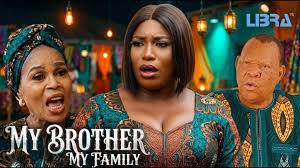
| Image:X |
In recent years, Yoruba cinema has leaned more into stories that reflect the realities of modern Nigerian life, especially the growing “Japa” conversation.
My Brother My Family, produced by LibraTv, fits squarely into this space, offering a layered narrative about migration, family strain, and the emotional cost of silence.
At the heart of the film is a family based in the United States, seemingly living a stable life until the sudden decision of the father to return to Nigeria under unclear circumstances.
What begins as a temporary trip quickly spirals into a prolonged absence, leaving behind a wife forced to carry the full weight of responsibility.
The film gradually peels back the illusion of the “perfect abroad life,” exposing the financial pressures, emotional isolation, and cracks that often go unseen.
Damilola Oni delivers the film’s most compelling performance. Her portrayal of a woman stretched thin by bills, loneliness, and uncertainty feels grounded and believable.
She captures the quiet strength and eventual emotional breakdown of someone trying to hold everything together when support disappears. Her scenes anchor the film, giving it emotional depth even when the story drifts.
Veteran actress Lola Idije adds authenticity from the “home” perspective, representing the cultural expectations and pressures that often follow Nigerians abroad.
The supporting cast also contributes to the film’s central tension, particularly in scenes that hint at deeper, possibly spiritual motivations behind the husband’s actions.
Thematically, the film explores more than just migration. It touches on trust within marriage, the burden of financial survival, and the dangerous consequences of poor communication.
There is also a subtle commentary on immigration realities, especially the risks tied to extended stays outside the U.S., which adds a layer of realism to the story.
Visually, the contrast between life in America and Nigeria is effectively portrayed. The calm but pressured environment abroad is set against a more chaotic and emotionally charged backdrop at home.
However, the film does struggle slightly with pacing, particularly in the middle, where scenes feel stretched without adding much progression.
Despite its flaws, My Brother My Family remains an engaging watch. It doesn’t try to be overly glamorous; instead, it leans into relatability and emotional truth.
While it occasionally relies on familiar Yoruba film tropes, its focus on the realities of diaspora life gives it a contemporary edge.
In the end, the film serves as a reminder that distance doesn’t just separate people physically it can also deepen emotional gaps, especially when truth is withheld.
#NollywoodTimes
#Nollywood











Leave a Reply