
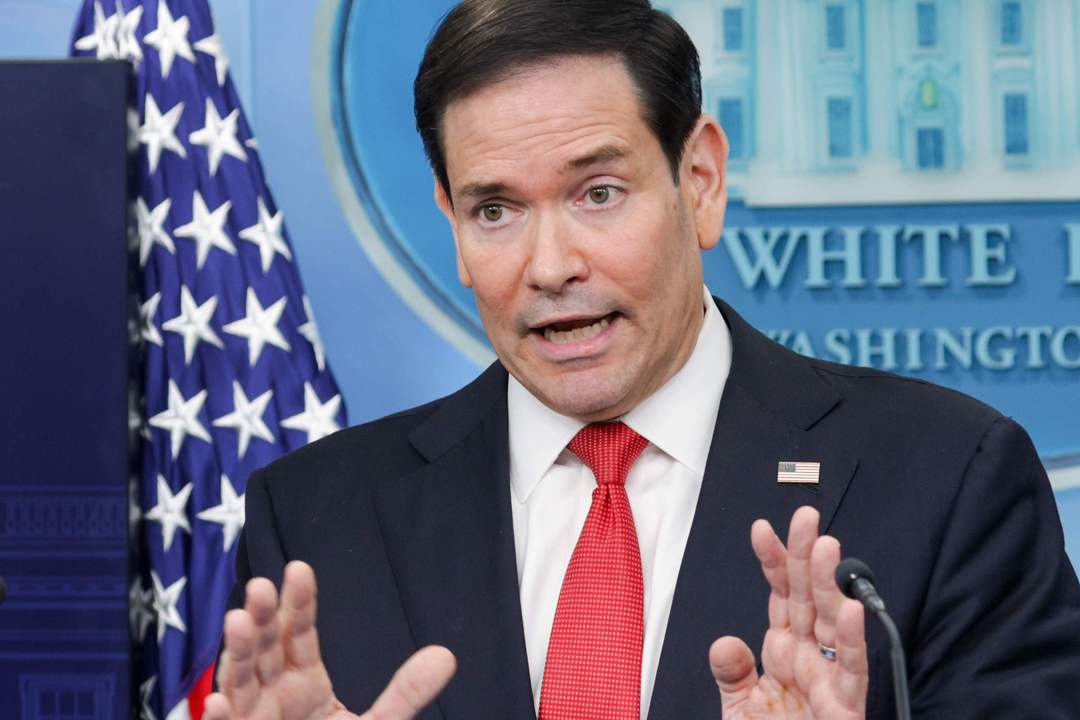
US Secretary of State Marco Rubio has warned that the United States is intensifying pressure on Cuba to change its communist political system following the indictment of former Cuban president Raul Castro.
Rubio made the remarks as tensions escalated between Washington and Havana after US authorities filed charges against Castro linked to the 1996 downing of two civilian aircraft flown by anti-Castro activists.
At the same time, the US military confirmed that the aircraft carrier USS Nimitz and accompanying warships had entered the Caribbean region. However, President Donald Trump denied the deployment was intended as a threat against Cuba, saying: “No, not at all.”
Rubio, a Cuban-American politician and longtime critic of Havana’s government, described Cuba as a “failed state” amid its worsening economic crisis. “Their economic system doesn’t work. It’s broken, and you can’t fix it with the current political system that’s in place,” Rubio told reporters in Miami.
“What they’ve gotten used to all these years is just buying time and waiting us out. They’re not going to be able to wait us out or buy time. We’re very serious. We’re very focused.” Rubio said Washington still preferred “a diplomatic solution” but suggested the Trump administration was prepared to consider other options if necessary.
He also revealed that Cuba had tentatively accepted a proposed $100 million US aid package tied to political and economic reforms. According to Rubio, negotiations remain uncertain because Washington wants to bypass GAESA, the military-linked conglomerate that dominates large sections of Cuba’s economy.
Earlier this month, the United States imposed sanctions on GAESA. Rubio also announced that Adys Lastres Morera, identified as the Florida-based sister of a GAESA executive, had been arrested by US immigration authorities. In a post on X, Rubio said she had been “managing real estate assets…while also aiding Havana’s communist regime, until I terminated her permanent resident status.”
The indictment against Raul Castro stems from the 1996 destruction of two civilian planes flown by anti-Castro activists, an incident that killed four people. In addition to murder-related allegations, Castro faces charges of conspiracy to kill Americans and destruction of aircraft.
The Cuban government has defended the shootdown as “legitimate self-defense” against what it described as an airspace violation. Cuban authorities responded angrily to the indictment and called for public protests against what they described as a “despicable” move by Washington.
State newspaper Granma urged citizens to gather outside the US embassy in Havana on Friday morning. “This isn’t really an accusation, something from more than 30 years ago, but rather a public attack on a public figure,” Havana resident Fabian Fernandez told AFP. Analysts have also drawn comparisons between the pressure campaign against Cuba and recent US actions targeting Nicolas Maduro in Venezuela.
Christopher Sabatini, senior fellow for Latin America at Chatham House, said: “The idea is to say, we can do to you what we did to Nicolas Maduro.” Cuba’s economic crisis has deepened in recent years following the collapse of subsidised oil support from Venezuela.
Residents across the island have endured prolonged power outages, severe inflation, water shortages and worsening living conditions. The US move against Castro has also drawn criticism from both China and Russia.
Chinese foreign ministry spokesman Guo Jiakun said Washington “should stop brandishing the sanctions stick and the judicial stick against Cuba and stop threatening force at every turn.” Meanwhile, Kremlin spokesman Dmitry Peskov said: “We believe that under no circumstances should such methods, which border on violence, be used against either former or current heads of state.”







Leave a Reply