
| Image:Google |
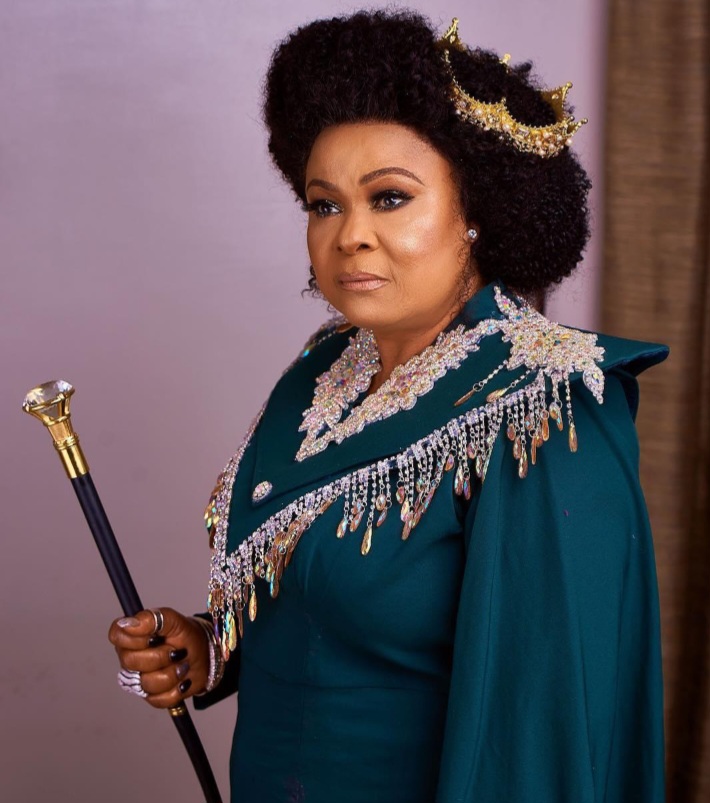
Sola Sobowale stands as one of the most accomplished and enduring figures in Nigerian entertainment, with a career that reflects both personal excellence and the broader evolution of Nollywood. From her early days in theatre and television to her commanding presence in modern blockbuster films, she has built a legacy defined by versatility, discipline, and cultural impact. Her story is often cited as a bridge between the foundational era of Nigerian screen acting and the globally recognized Nollywood industry of today.
Born on 26 December 1965 in Ondo State, Nigeria, Sola Sobowale was raised in a disciplined and education-oriented household. Both of her parents were teachers, and this environment played a significant role in shaping her values, communication skills, and sense of responsibility. Growing up in such a structured setting also exposed her early to storytelling, language, and performance, which later became central to her professional life. Unlike many modern actors who enter the industry through informal pathways, Sobowale’s foundation was shaped by both academic and cultural discipline.
Her academic journey led her to the University of Ibadan, one of Nigeria’s most respected higher institutions. There, she studied Theatre Arts, a decision that proved pivotal to her career trajectory. The programme exposed her to formal acting techniques, stage production, and dramatic interpretation. This classical training placed her among a generation of Nigerian actors who combined academic knowledge with practical performance experience. The University of Ibadan’s Theatre Arts Department has historically been a cradle for many of Nigeria’s pioneering performers, and Sobowale’s time there strengthened her ability to embody complex characters with depth and authenticity.
Sola Sobowale began her professional career in the theatre and early Nigerian television industry long before Nollywood evolved into a global cinematic force. She appeared in iconic television productions such as Village Headmaster and Mirror in the Sun, both of which were highly influential in shaping Nigeria’s early television culture. These productions relied heavily on strong dialogue delivery and expressive acting, and Sobowale quickly established herself as a performer capable of commanding attention on screen. She also took part in stage plays, including politically and socially conscious productions such as Our Husband Has Gone Mad Again. These experiences helped refine her dramatic timing, voice projection, and emotional range.
Her breakthrough into mainstream popularity came in 2001 through the widely watched television drama series Super Story, produced by Wale Adenuga Productions. In the storyline titled Oh Father, Oh Daughter, she portrayed the character “Toyin Tomato,” a role that would become one of the most recognizable in Nigerian television history. The character was bold, emotionally complex, and deeply expressive, and Sobowale’s performance resonated strongly with audiences across the country. The popularity of “Toyin Tomato” was so significant that it became a cultural reference point, cementing her status as a household name in Nigeria.
Beyond acting, Sobowale has also contributed to the industry as a filmmaker. Her experience spans multiple aspects of production, including screenwriting and directing. This multi-dimensional involvement is significant because it reflects a deeper understanding of storytelling beyond performance alone. Her knowledge of production processes has contributed to her ability to interpret scripts with greater insight and deliver performances that align closely with directorial vision.
At a certain point in her career, she stepped away from Nollywood and relocated to the United Kingdom. During this period, she focused on her family and adapted to life outside the entertainment industry. Reports indicate that she also worked in non-entertainment jobs during her time abroad. This phase of her life is often highlighted as a testament to her humility and resilience, as she temporarily stepped away from fame to focus on personal responsibilities. Despite this break, she maintained her connection to acting and eventually made a powerful return to the Nigerian film industry.
Her comeback marked one of the most remarkable returns in Nollywood history. In 2016, she starred in The Wedding Party, a romantic comedy that became one of Nigeria’s highest-grossing cinematic productions. Her performance was widely praised for its humour, emotional balance, and screen presence. The film introduced her to a new generation of audiences and reaffirmed her relevance in a rapidly evolving industry that had shifted toward cinema-based storytelling and international distribution.
However, her most critically acclaimed modern performance came in 2018 with the political drama King of Boys, directed by Kemi Adetiba. In the film, she played Alhaja Eniola Salami, a powerful and influential businesswoman deeply involved in political and social power struggles. The role required intensity, authority, emotional complexity, and psychological depth, all of which she delivered with remarkable precision. Her performance was widely regarded as one of the strongest in contemporary Nollywood cinema, earning her critical acclaim, awards recognition, and widespread audience admiration. The character of Eniola Salami became iconic, symbolising ambition, power, and moral complexity in modern Nigerian storytelling.
Over the years, Sola Sobowale has received numerous awards and honours in recognition of her contributions to film and television. These accolades reflect not only her talent but also her longevity in an industry known for rapid turnover. Her ability to remain relevant across decades of change from analogue television drama to digital streaming platforms demonstrates her adaptability and artistic discipline.
In addition to her professional achievements, she is also regarded as a mentor and inspiration to younger actors in Nollywood. Many emerging performers cite her as an influence due to her expressive acting style, emotional depth, and ability to transition seamlessly between comedic and dramatic roles. Her career represents a living connection between Nigeria’s early performing arts culture and its modern cinematic identity.
Today, Sola Sobowale continues to remain active in the film industry, taking on roles that reflect her experience and artistic maturity. She is widely respected not only as an actress but also as a cultural icon whose work has helped shape the identity of Nigerian cinema on both local and international stages.
In summary, her journey reflects resilience, transformation, and excellence. From her foundational training at the University of Ibadan, through her early theatre and television work, to her breakthrough as “Toyin Tomato” and her acclaimed performances in modern classics like The Wedding Party and King of Boys, she has consistently demonstrated artistic strength and cultural relevance. Her legacy in Nollywood is firmly established, making her one of the most respected and influential figures in African entertainment history.
#SolaSobowale
#NollywoodLegend
#KingOfBoys
#AfricanCinema










Leave a Reply